Latista → Oracle Prime Field
Four years as the sole product designer on Latista's construction field platform. Three months of jobsite research turned into four shipped products: an iOS rebuild, a foreman app for subcontractors, a fast punch-walk capture flow, and daily reports.
- Role
- Sole Product Designer — research, flows, UI, custom icon system
- Years
- 2015 — 2020
- Platforms
- iOS, Android, MS Windows Surface, Web
- Industry
- Construction Technology · Field Operations
No UX. No research. A backlog of degrading customer feedback. I asked to go to the sites.
When I joined Latista there were no UX or UI designers on the product, and no research had been done. Customer service was collecting a stack of feedback tickets, and the quality of the information in those tickets was getting worse over time.
I started by learning what the product was for. Latista is a field issue-tracking system used on large commercial construction projects: high-rise towers, hospital campuses, airport terminals. A general contractor's superintendent walks the site, logs defects, and coordinates the subcontractors who fix them.
That much I could learn from the office. What I couldn't learn from the office was how the app actually got used on a jobsite, and where it failed the people using it. I asked to go to the sites and got approval for three months of field research. I visited multiple projects. I started before sunrise to catch mobilization and stayed through the afternoon. I walked with general contractors and subcontractor foremen. I watched them use Latista, and I watched them use everything Latista couldn't cover: Primavera for scheduling, SharePoint and AWS for drawings, WhatsApp for coordination, paper checklists in a manila folder. The most useful thing I learned was where the workflow routed around the app entirely.
Four problems. Four shipped things.
A few problems came up consistently across sites.
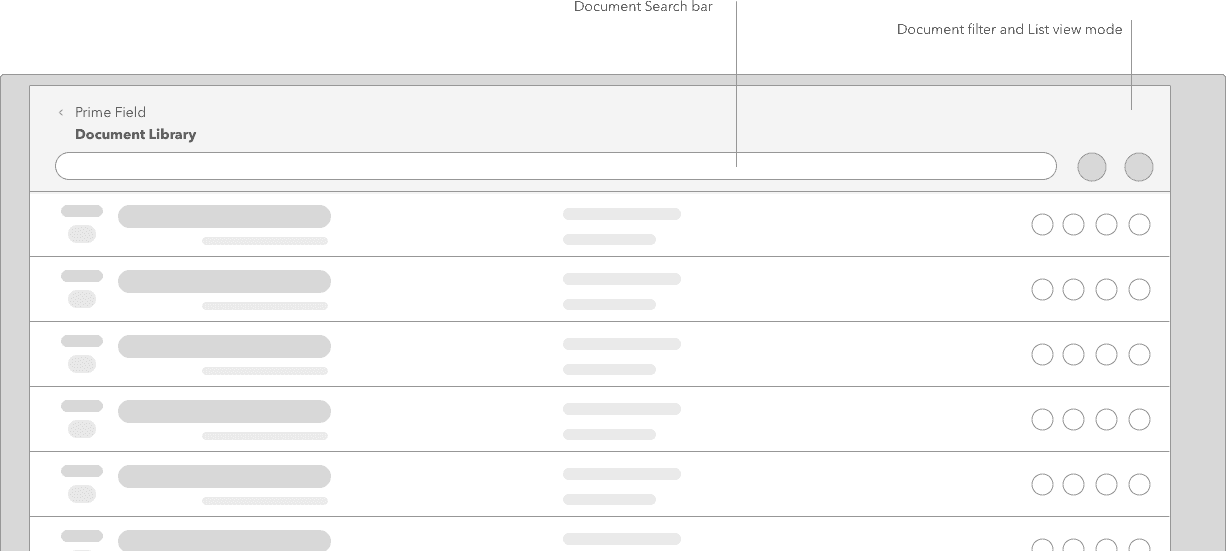
The primary add-issue action was hard to find. Foremen had to hunt for it in the interface. The issue-creation form itself was too long to use during a walk. The file library kept every project drawing in one flat directory, so an electrical foreman had to scroll past four hundred plumbing and structural sheets to reach their own trade. The app had no concept of drawings organized by discipline.
Task distribution was worse, and it wasn't in the app at all. Every morning the general contractor printed the day's tasks on paper. Subcontractor foremen walked to the GC's trailer, picked up their sheet, and walked back out. The GC then walked the field again to track progress, took photos, and reconciled everything across three or four systems: Latista for issues, Primavera for the master schedule, another application for daily tasks, another for drawings. Files were spread across AWS, SharePoint, and email attachments. Most of the subcontractor foremen were native Spanish speakers. Most of them used Android phones. Most of them were not iPad users. They were being asked to reconcile all of that in their heads.
The final walk was its own problem. The general contractor, subcontractor, and owner walk the site together at the end of a phase. The owner calls out issues every few seconds and the subcontractor's rep takes notes on paper. Latista took about two minutes to log a single issue in that flow. A walk with sixty items meant either falling behind and dropping some, or logging them properly and losing the owner's attention.
Each of these became its own project. The four chapters below are the ones that shipped.
What shipped, in order.
Each chapter is its own long-form case study.
- 012019 — 2020Chapter 01 · 2019 – 2020
iOS Rebuild and File Library Restructure
Rebuilding the Oracle Prime Field iOS client around Apple's interaction patterns, restructuring the file library so drawings live under their trade, and shipping a custom icon font for the construction vocabulary iOS didn't cover.
read chapter↗ - 022016Chapter 02 · 2016
Latista Foreman App
A mobile issue-resolution app for the subcontractor foremen on the other side of Latista's construction QA platform.
read chapter↗ - 032016 — 2017Chapter 03 · 2016 – 2017
Quick Punch — draft issues at punch-walk speed
Cutting the intake time for a single issue in Oracle Prime Field from three-plus minutes down to a few seconds, without losing anything QA needed later.
read chapter↗ - 042017 — 2018Chapter 04 · 2017 – 2018
Daily Reports — the legal record of a construction day
Designing the missing daily-log module inside Oracle Prime Field, built for the site super at 5:30pm on a Friday and the claims attorney reading it two years later.
read chapter↗
What I would do the same way: earn the domain from the field before designing from the office. Every good decision I made on Latista traced back to the three months of jobsite time. The decisions I made without that context tended to get walked back later. What I would change: I would bring a translator to the field earlier. My best interviews with subcontractor foremen happened with a translator present. The ones I ran in broken English gave me about half the picture.