CHANGE Card
Embedding a pay card and a points-based loyalty program inside an HR staffing platform.
- Role
- Lead UX Designer
- Year
- 2019
- Platform
- Industry
- FinTech / HR SaaS
Avionté wanted a Visa Signature pay card and a points-based loyalty marketplace running inside their staffing software. This was the first time they had ever embedded a banking product into their SaaS. I led UX across both sides: the Talent Portal where temp workers manage their card, and the Agency Portal where HR admins run card inventory and the loyalty program, plus a redemption marketplace tied to the card at checkout. Two six-week engagements. Three portals reconciled into a single sitemap. A lot of workflow mapping before anyone drew a screen.
Avionté sells staffing and recruiting software to HR agencies. Those agencies place temp workers, and those workers used to get paid by paper check: slow, expensive to process, and difficult for anyone without a bank account. Avionté partnered with RFS to launch CHANGE Card, a co-branded Visa Signature card that pays talent instantly and works like any debit card. On top of the pay card, they layered a loyalty rewards program so agencies could give talent a reason to keep showing up to shifts.
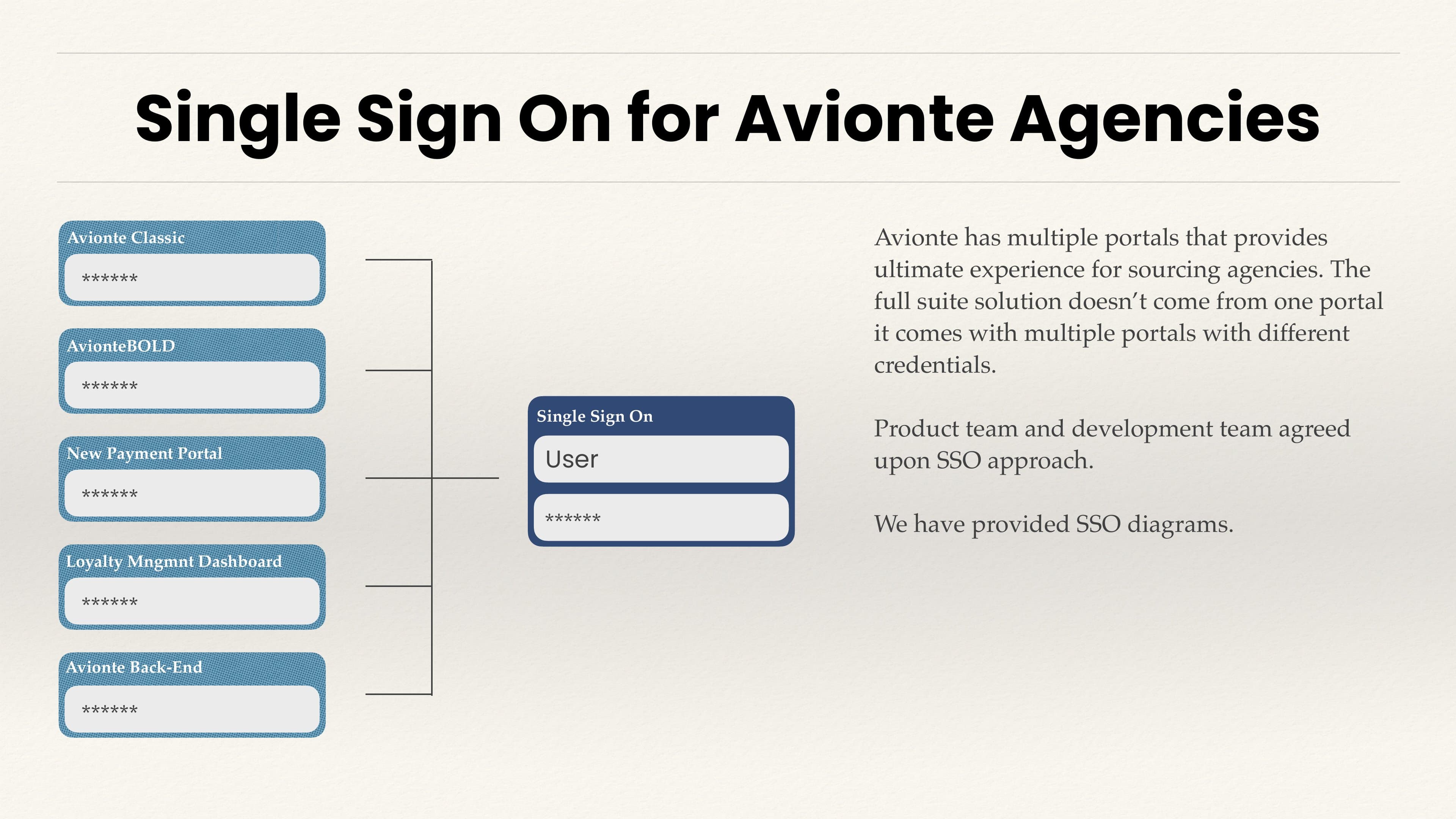
The stakes were real. This was Avionté's first embedded banking product, and it had to sit inside two existing systems (Avionte Classic and AvionteBOLD) plus a new Payment Portal and Loyalty Dashboard, all behind single sign-on. Compliance-heavy flows (disputes, PIN management, card replacement) had to feel simple to a temp worker checking their phone between shifts. Admin flows (card inventory, reissue, loyalty rules) had to feel powerful to an agency admin running hundreds of cardholders.
I came in through 3PillarGlobal as Lead UX Designer, working with PM Massi Behbahani and Technical Analyst Hitesh Acharya on delivery, and Avionté's PM Chad Meyer plus RFS CEO Daren Jackson on the client side. Two six-week engagements: first for CHANGE Card, second for Loyalty. Same team, same rhythm: learn, validate, map, screens, iterate.
What was broken.
Three separate portals wanted to be one product. Avionte Classic, AvionteBOLD, and the new Payment and Loyalty tools each had their own information architecture, their own conventions, and their own permission models. If we shipped them as three menus, admins would spend the day tab-switching and talent would lose track of which login did what. The real problem wasn't drawing pretty screens. It was reconciling three sitemaps into one that a human could hold in their head.
The second challenge was the workflow itself. A talent worker losing their card kicks off a chain. Freeze the card in the Talent Portal. Notify the agency. The agency confirms in the Agency Portal. Inventory pulls a replacement. The mailing address gets verified. A new card gets registered against the account. The old card gets deactivated. Talent activates the new one. Every step touches a different system: FIS APIs, RFS APIs, TD Bank, Blackhawk for the marketplace. Break any hop and someone doesn't get paid, and for these workers that is rent money.
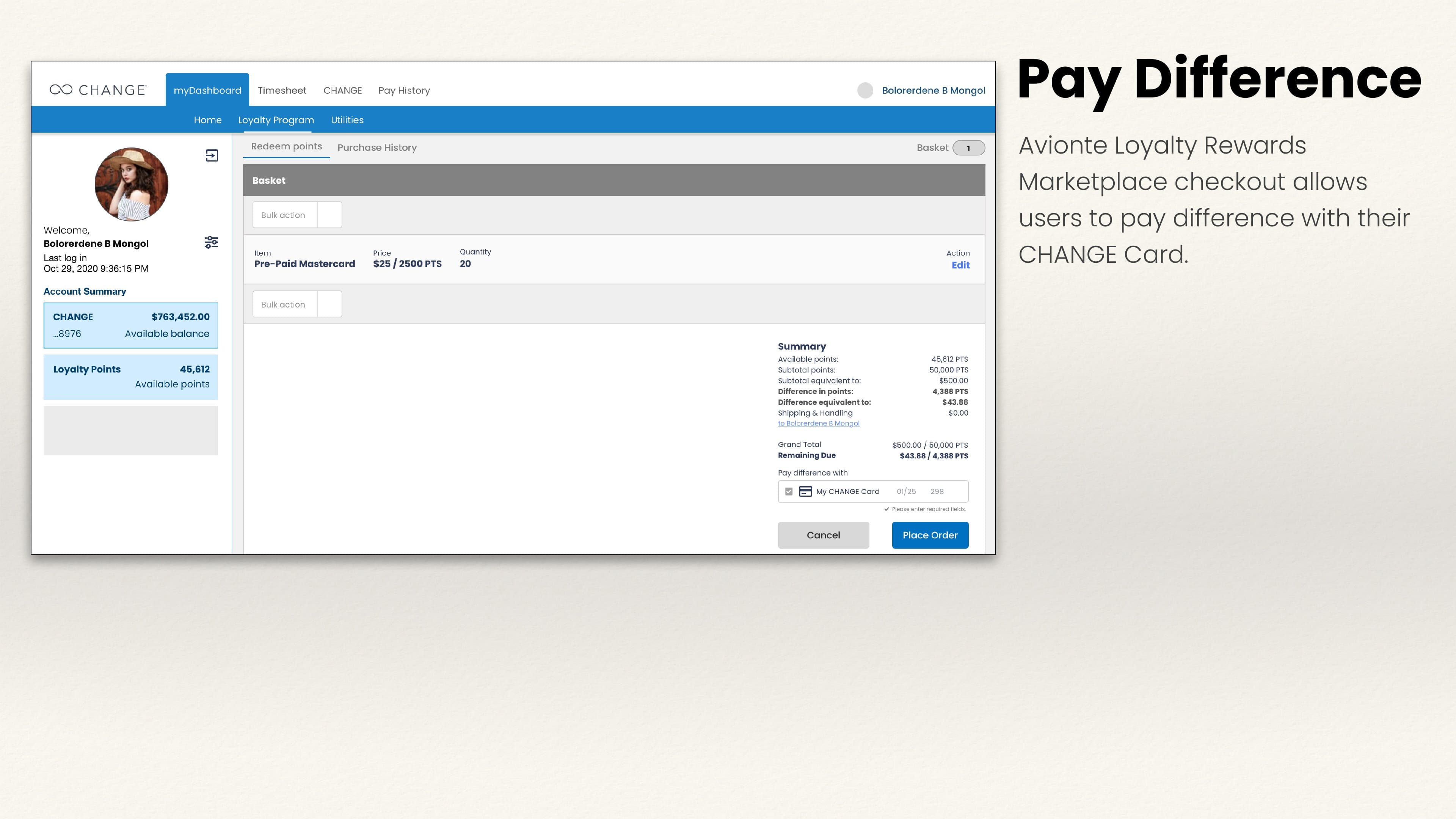
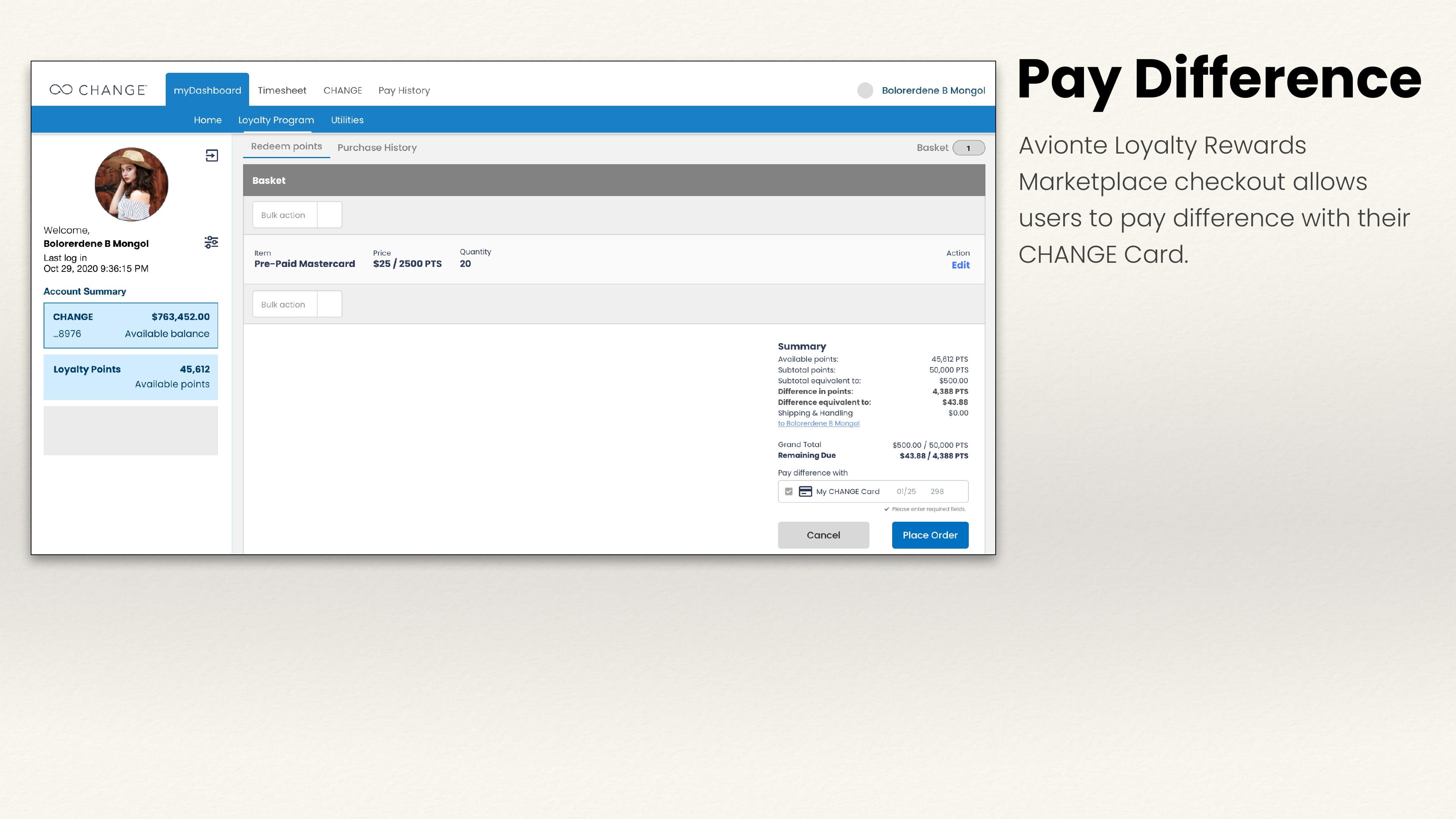
The third challenge was that the loyalty marketplace had to let talent buy a gift card partly with points and partly with their CHANGE Card at checkout, fulfilled through Blackhawk. A payment flow inside a rewards flow inside an HR platform. That is not something you design by opening Figma and pushing rectangles around.
Workflow before interface
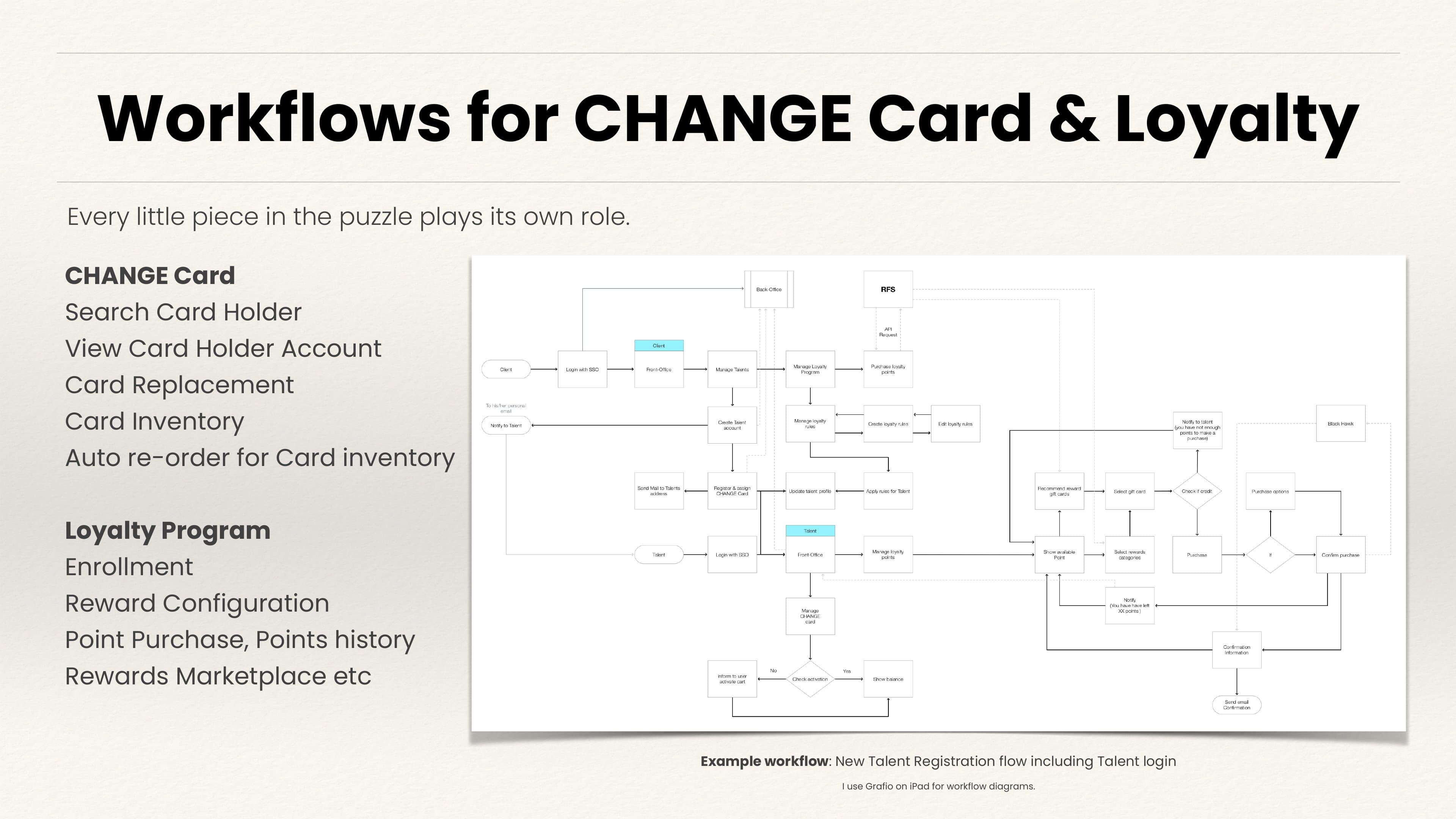
Every screen I drew started as a flow diagram. I built the workflows in Grafio on an iPad so I could sketch them fast with stakeholders in the room instead of modeling them formally. Once the workflow held up in a whiteboard conversation with the RFS and Avionté PMs, I moved to wireframes. Below is the core lost-card-to-replacement flow, which touches the most systems and has the most ways to fail.
- 1
Report card lost
Talent opens the Talent Portal on mobile, taps their card, and hits Report Lost/Stolen. The card freezes immediately through the FIS API. No admin action is required to lock the card down.
Talent - 2
Agency notified
The agency admin sees the flagged account in their queue inside the Agency Portal, including the cardholder record, recent transactions, and a suggested action (Reissue or Instant Replacement).
Agency Admin - 3
Pull from inventory
The admin picks Reissue. The Card Inventory module reserves a physical card from stock and fires an automatic re-order when stock drops below a threshold. No spreadsheet, no phone call to RFS.
Agency Admin + System - 4
Verify mailing address
The system pulls the talent's address from their profile. The admin confirms or edits it, and mail goes out. This step exists because addresses go stale and wrong mail costs the agency money.
Agency Admin - 5
Register new card to account
The new card number links to the existing account through the RFS APIs. The old card stays frozen. Direct deposit routing, saved beneficiaries, and alerts are preserved.
System - 6
Talent activates
Talent receives the physical card, opens the Talent Portal, activates it, sets a PIN, and confirms alerts. The old card is now permanently deactivated.
Talent - 7
Loyalty balance preserved
Points, transaction history, and dispute records follow the account rather than the card. This became a deliberate decision rather than a default. Early flows dropped the points when the card changed. We fixed it in the second engagement.
System
From tangled to shipped.
Learn
The first two weeks were stakeholder interviews and system walkthroughs. I sat with the RFS team to learn the banking side (what FIS returns, what TD Bank requires, where card inventory physically lives) and with Avionté's team to see how agencies use Avionte Classic and AvionteBOLD today. Nobody had a single sitemap, so I built one from scratch by walking both products screen by screen.
Validate
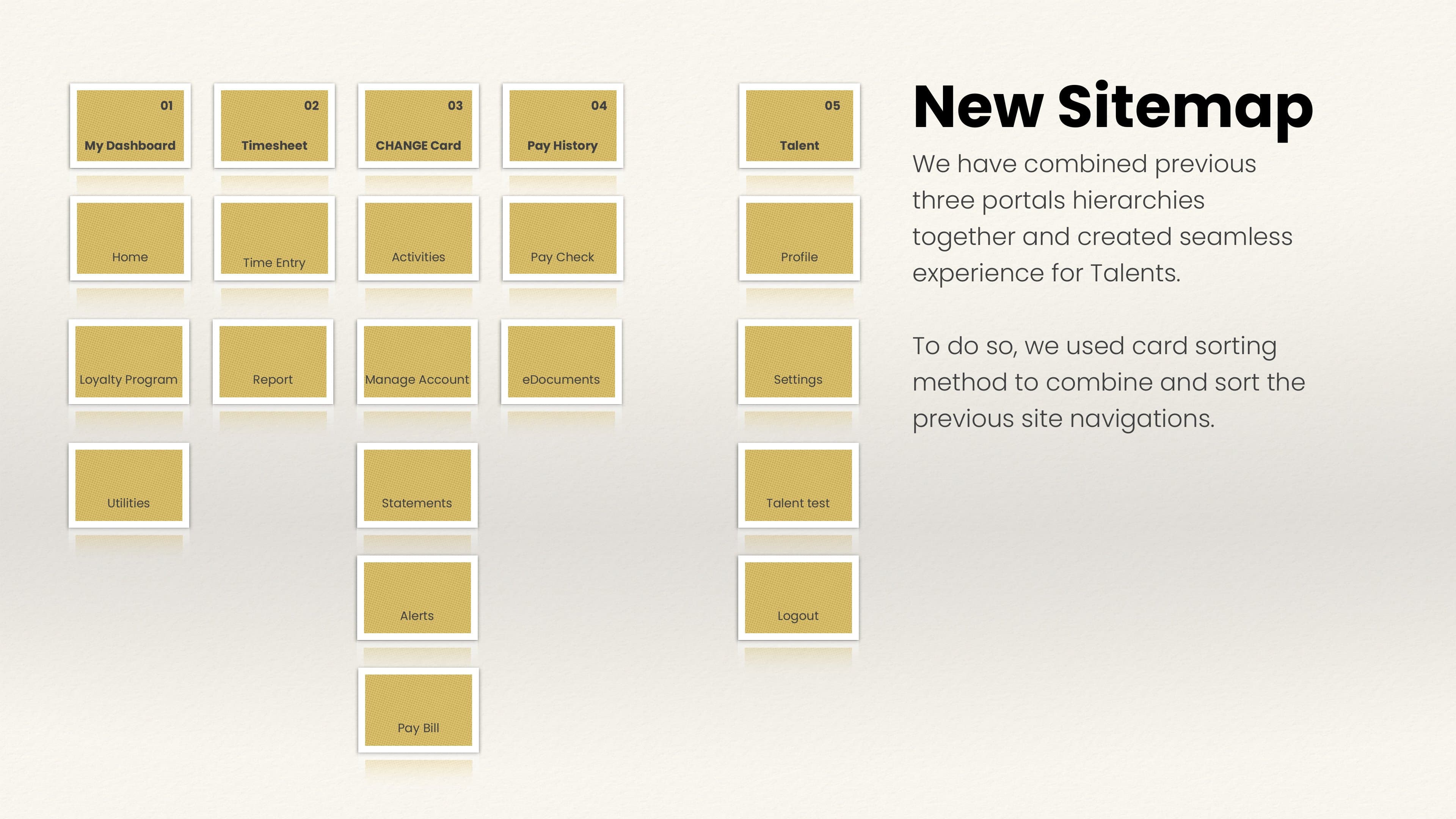
Card sorting in FigJam with the joint team. I put every function from all three portals (talent card management, agency card admin, loyalty rules, inventory, payments) on cards and let stakeholders group them. That is where the merged IA came from. It wasn't mine. It was the group's IA, which I facilitated and then cleaned up.
Map workflows
Grafio on iPad, live, in meetings. I drew the CHANGE Card flows (activation, freeze, dispute, PIN, alerts) and the Loyalty flows (enrollment, rule creation, redemption, checkout with points plus card) while the PMs watched. Every arrow that touched an API got labeled with the system that owned it. That is how we caught the points-lost-on-card-reissue bug before a line of code was written.
Screens and prototypes
Wireframes first, then a visual layer aligned to the AvionteBOLD style guide so the new portals felt like part of the product family rather than a bolted-on banking app. Prototyped in InVision and Figma. Two audiences meant two design languages inside one system: the Talent Portal skewed mobile-first and friendly, while the Agency Portal was denser and data-heavy.
Iterate, twice
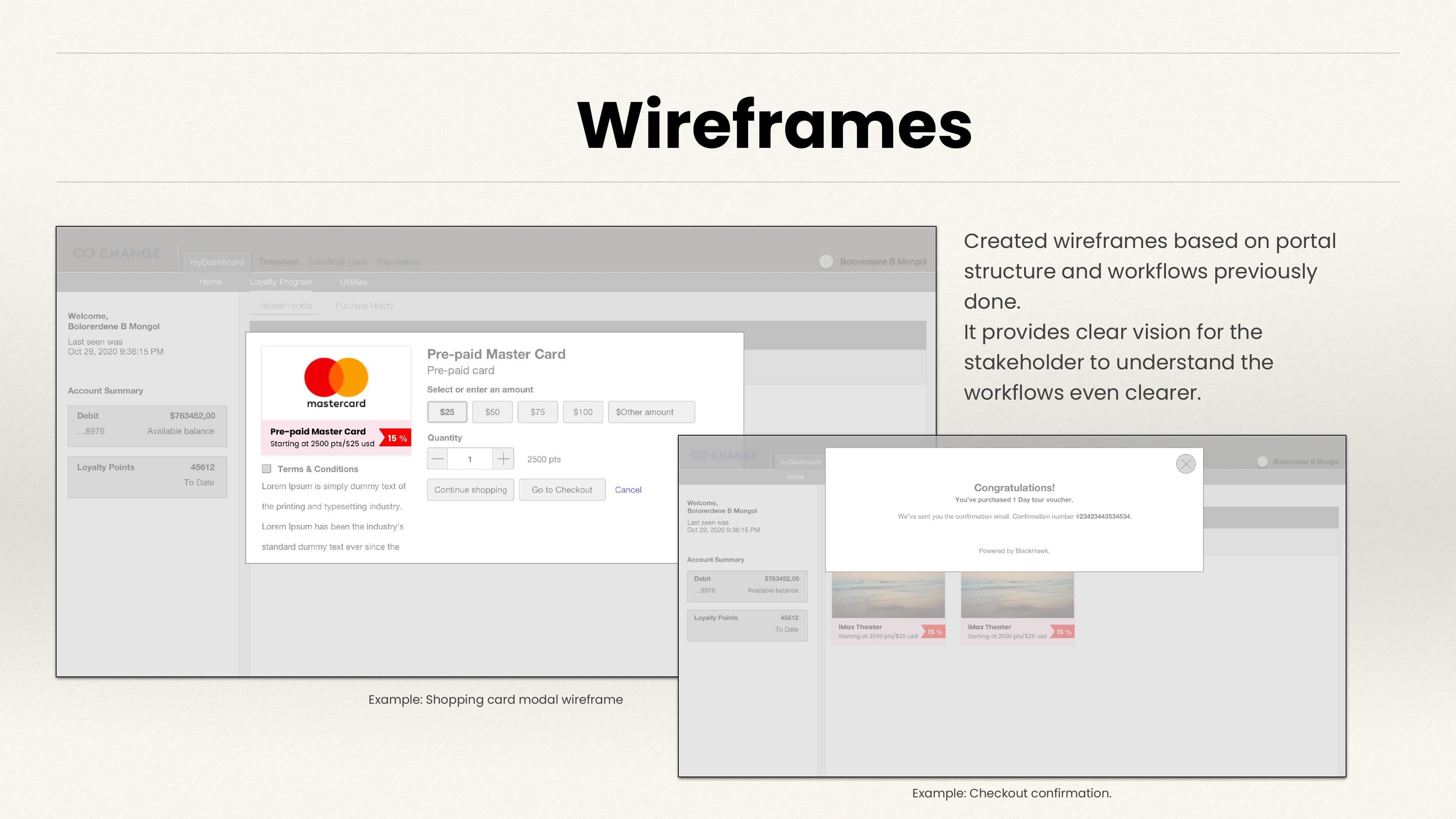
The engagement ran twice. The first round was CHANGE Card core. The second round was the Loyalty Rewards Marketplace plus fixes from round one, including the points-preservation issue, tightening agency search (by account, name, SSN, or mobile), and the checkout flow where talent pays a point-vs-price difference at Blackhawk fulfillment.
The moves that worked.
One sitemap from three portals
Merged Avionte Classic, AvionteBOLD, and the new Payment and Loyalty tools into a single navigable structure behind SSO. Admins log in once and move between contexts without re-authenticating or relearning menus.
Talent Portal built for a phone
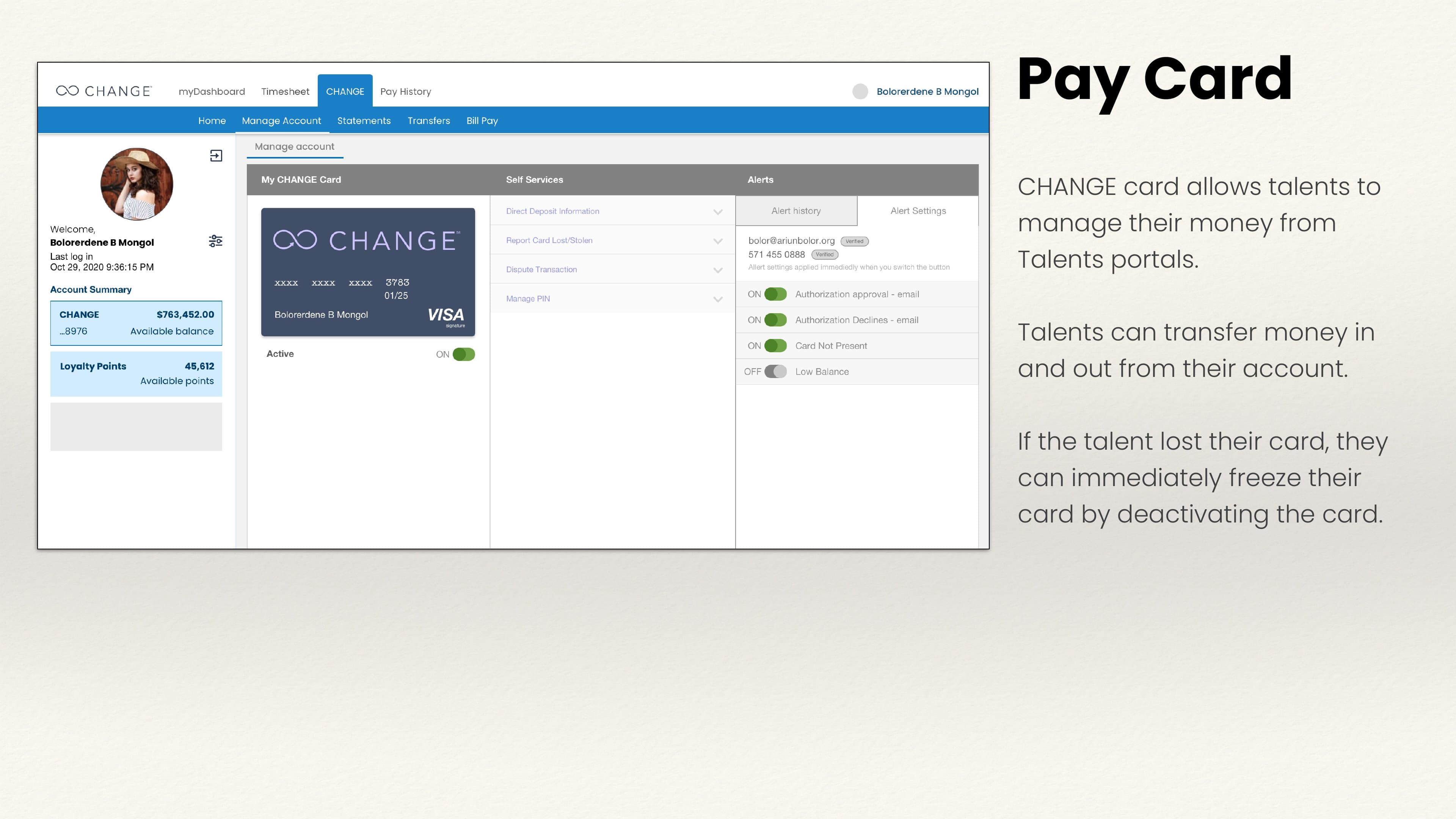
The primary user is a temp worker checking their card between shifts. Balance up top, common actions (freeze, direct deposit, PIN, dispute) one tap away, alerts configurable in plain language. No banking jargon.
Agency Portal built for volume
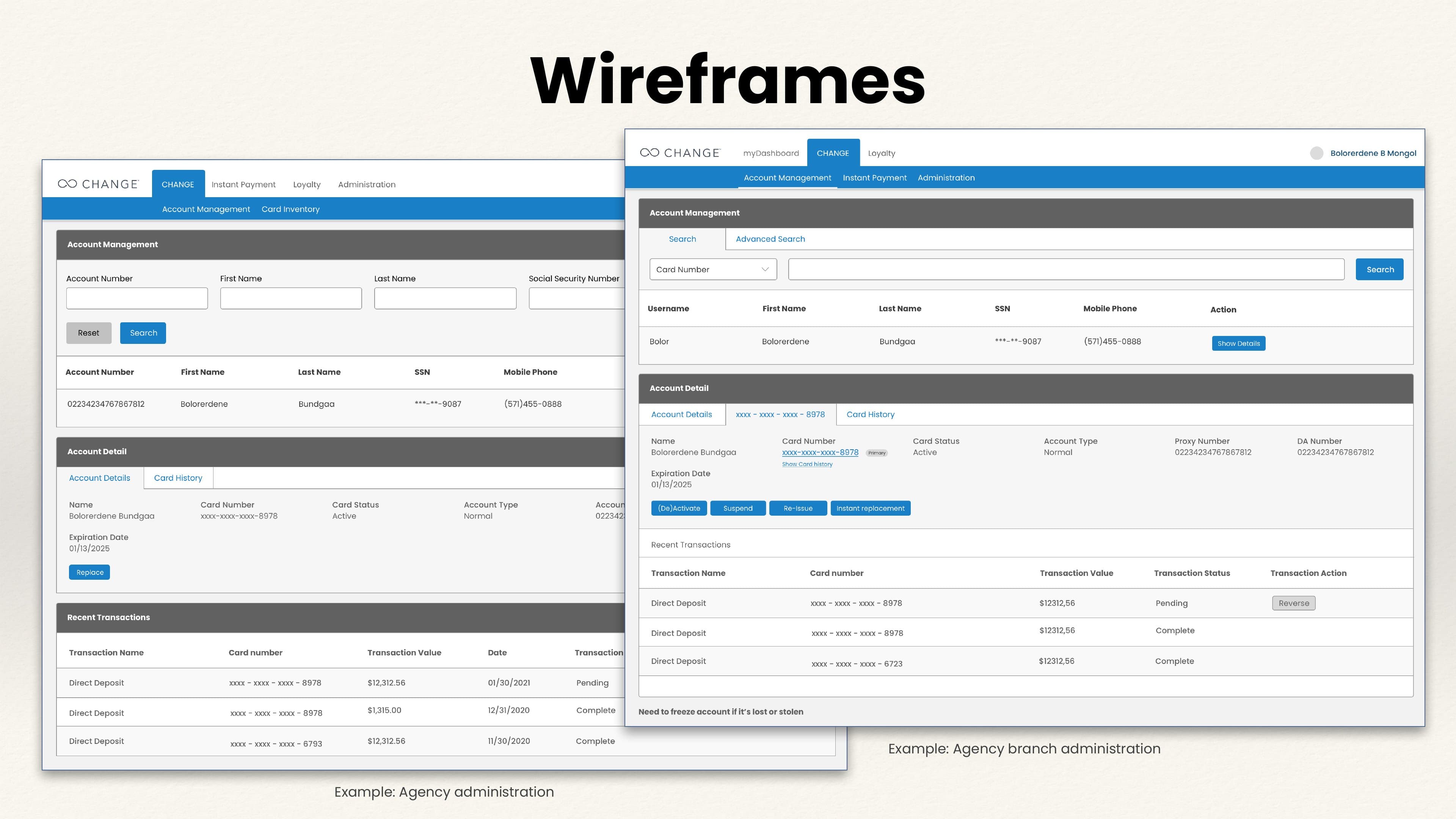
Search by account, name, SSN, or mobile. The cardholder record shows account status, card history, recent transactions, and quick actions (activate, suspend, reissue, instant replacement) in one view. Card inventory tracks physical stock and auto re-orders.
Loyalty Rewards Marketplace
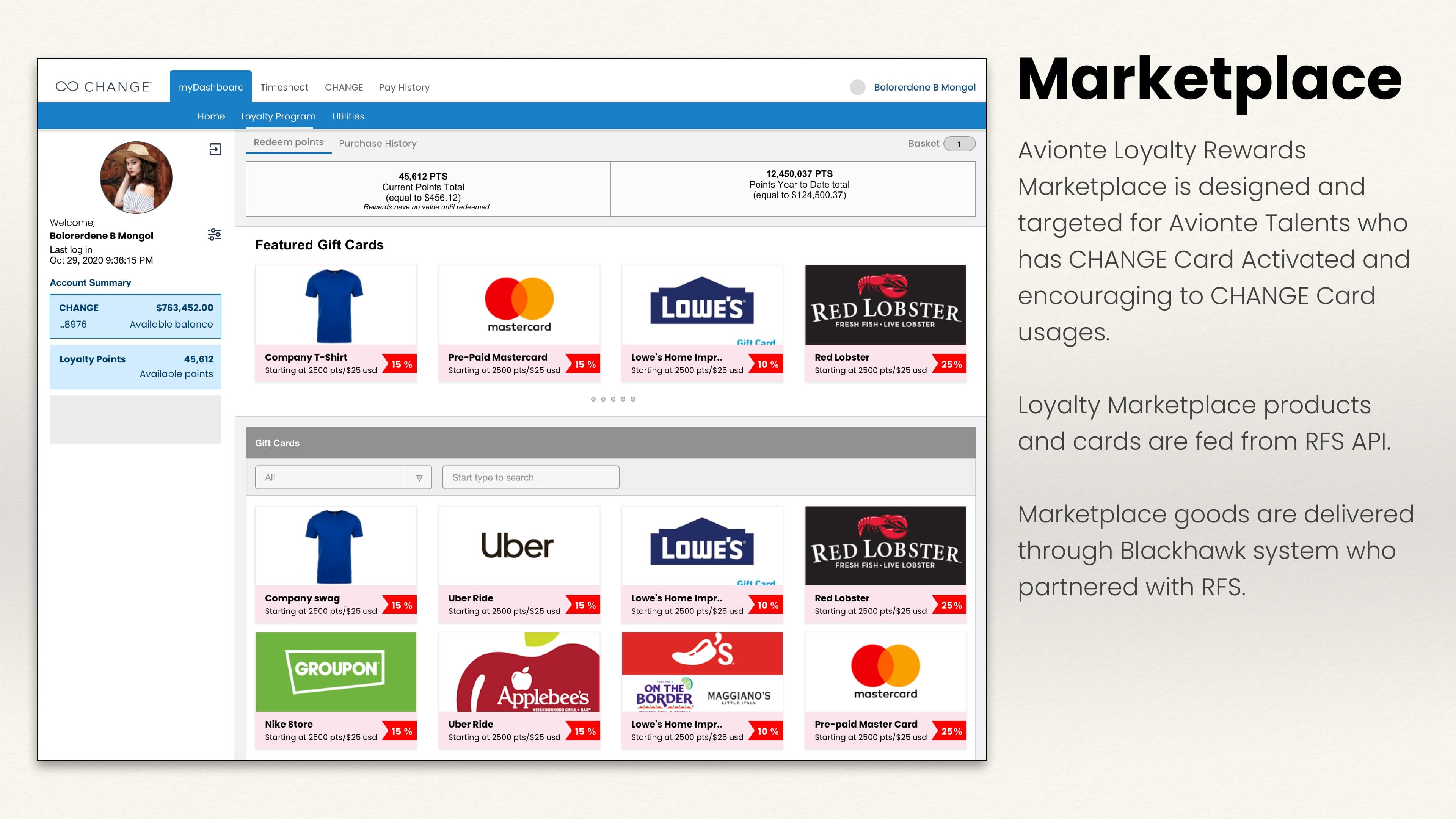
Talent browses gift cards (Uber, Lowe's, Red Lobster, Groupon, Applebee's, Nike, Chili's, prepaid Mastercard, company swag), redeems with points, and covers any difference with their CHANGE Card at checkout through Blackhawk fulfillment. Points and history follow the account rather than the card.
Loyalty administration for agencies
Agencies enroll talent, configure reward rules (per shift, per hours, per milestone), buy and track point balances, and see redemption history. The rules engine took the most rework, because the early versions were too rigid.
Workflow diagrams as a shared artifact
The Grafio workflow maps became the reference doc for engineering, RFS, and the Avionté PM. Every API integration (FIS, RFS, TD Bank, Blackhawk) got labeled on the flow so nobody had to guess who owned a hop.
Screens and scraps.
What shipped. What changed.
Shipped the CHANGE Card platform and the Loyalty Rewards Marketplace across two six-week engagements. Deliverables: a unified sitemap merging three existing portals, workflow diagrams covering the full card and loyalty lifecycles, wireframes and interactive prototypes in InVision and Figma, and a final visual system aligned to AvionteBOLD. The design work covered talent-facing card management, agency-facing account and inventory administration, loyalty program configuration, and the points-plus-card checkout flow with Blackhawk. I don't have public adoption numbers to share, but the product went into Avionté's platform as their first embedded banking solution.
“The lesson I take from this project: when a design has to sit inside multiple existing systems with multiple API owners, the interface is the last thing you draw. The workflow is the design. I got the points-on-reissue detail wrong in the first pass because I designed the reissue flow from the agency's perspective and forgot the talent was watching their loyalty balance disappear. Catching it in round two was a reminder that flows need to be walked from every actor's seat, not just the one giving you the requirements.”
Centene Insurance Appeals
Designing a digital appeals module for Indiana Medicaid providers, built on top of four back-office systems and four roles.